
Elections Are About People
June 2, 2026 Primary Vote Center Observation Reflections


Tuesday was primary Election Day here in California and we took the opportunity to visit six Election Day vote centers in Los Angeles County. Most of these were vote centers that we’ve studied in the recent past, and it’s always a great experience returning to study vote center operations in different election contexts. In this situation, some of these vote centers were ones that we studied in the 2024 general election.
On Election Day, we found that business at these voting centers was brisk — not quite as busy as during the 2024 general election, but still quite busy. While we will need to wait for data after the canvass is completed, our hypothesis is that given the uncertain competitive situation in both the gubernatorial and LA mayoral primaries, many LA County voters might have been waiting until the last minute to return or complete their ballots.
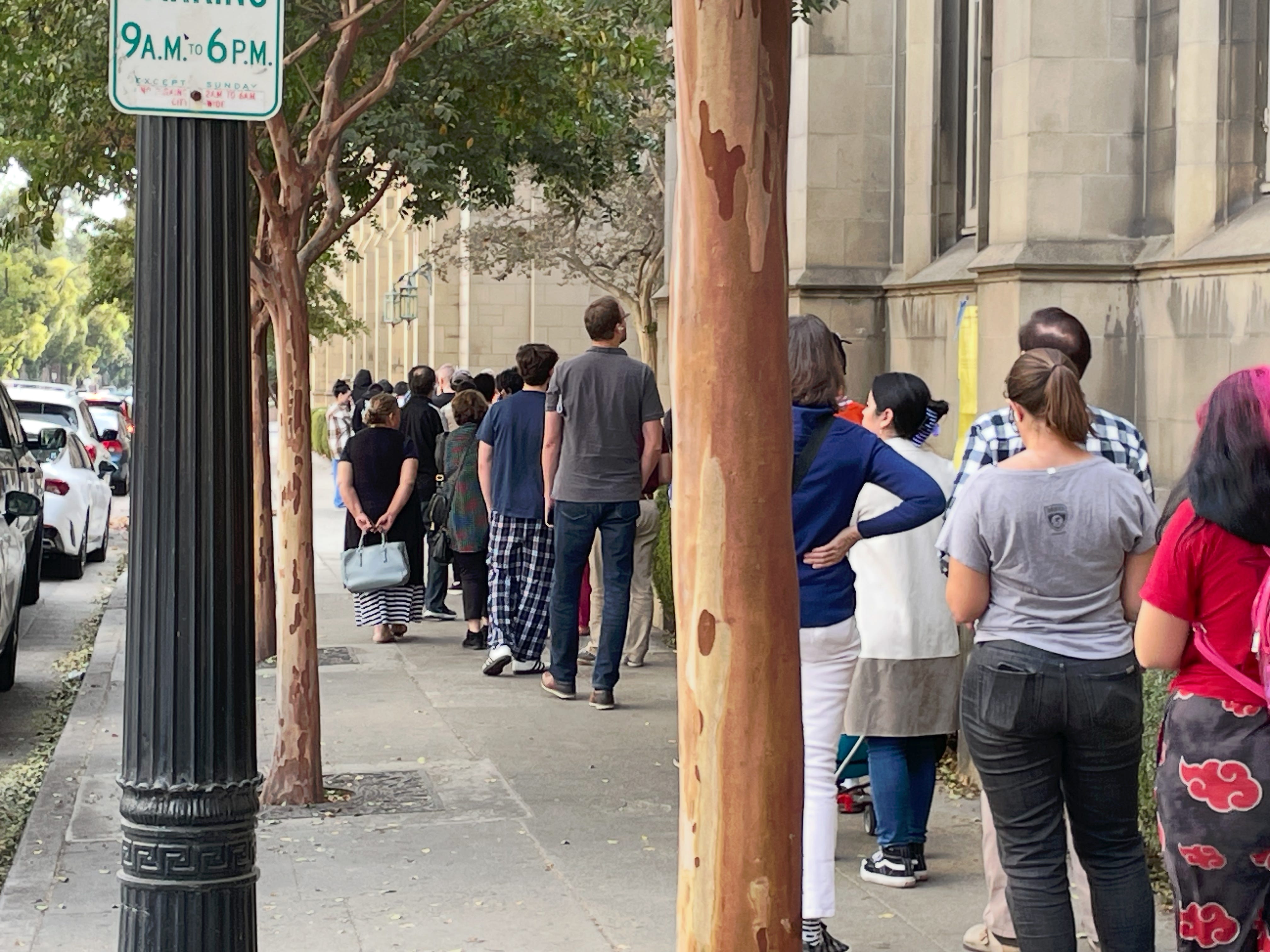
Based on our observations on Election Day, we are not surprised that there are many unprocessed ballots, and that we are still waiting to learn the outcomes of many of the primary races on the ballot. Many voters were showing up at vote centers not to vote in person, but to drop off their completed vote-by-mail ballots. A substantial number of those we saw entering these vote centers came clutching their completed vote-by-mail ballots, and wanted to see them dropped into the ballot box in the vote center. Waves of voters arrived in the evening after work, with traffic at one vote center picking up significantly around 5 pm after a relatively quiet preceding hour.
We also witnessed quite a few voters who were using provisional ballots, or conditional voter registration provisional ballots. Some voters walked in and knew to ask for a provisional ballot, but others with more complex inquiries required more assistance from poll workers. This seemed to be more pronounced at some vote centers, a qualitative observation that we are hoping to confirm and analysis more deeply after the election. If the data shows that provisional ballot use is heavier at some vote centers than others, that has important implications for resource allocation and vote center layout — locations that might have a higher incidence of provisional voters and conditional registrants need space for voters to complete paperwork and may need more staff at the check-in tables.
The vote centers we visited on Tuesday were in relatively densely populated areas, and were in locations that during the day also had other uses — in particular libraries, elementary schools, parks, and public service agencies. Not surprisingly, being LA County, this meant that parking and accessibility are important considerations for vote center operations. Parking at these locations was scarce, and in some places it was not readily apparent from the car where a voter with special accessibility needs might stop to get assistance. Of course, some vote centers will have an easier time accommodating parking than others. One location we visited had street parking and a nearby large public parking structure, but another location had much of its parking blocked due to utility construction along the adjacent streets.
Throughout our vote center observations, though, we encountered helpful and pleasant vote center staff, who were all working to provide voters with a positive voting experience. We were pleased to see how many languages were spoken by staff across vote centers, which is important in a place as multicultural as LA County. We noticed poll workers who in addition to English could assist voters in Spanish, Vietnamese, Mandarin, Thai, and Tagalog. While they were busy, and voters were asking questions and engaging in complicated transactions like provisional balloting, we were impressed by the overall positive environments in these voting centers.
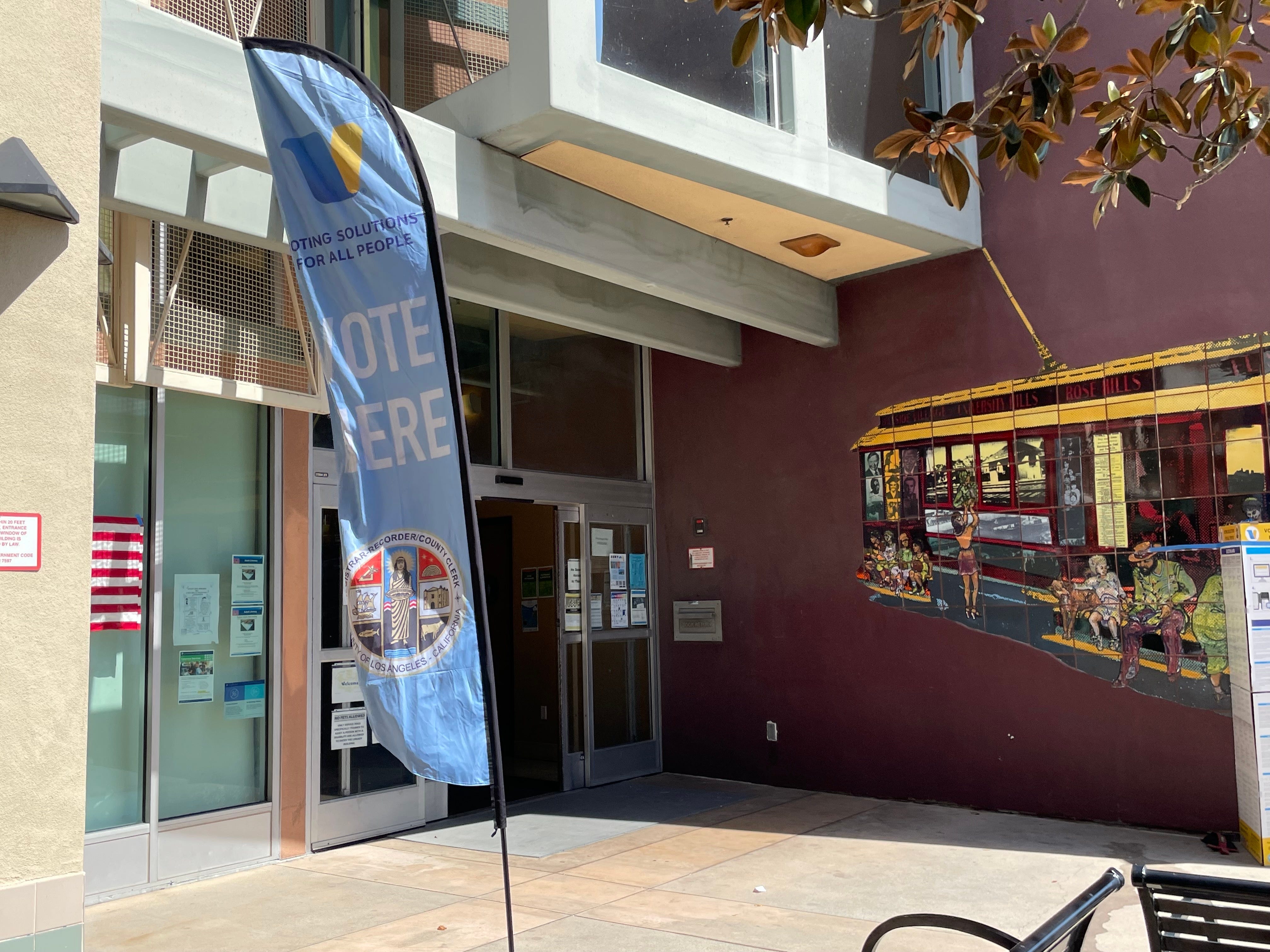
How does that happen? One important factor that we will need to study more closely is training. Based on our observations, we saw vote center staff following what we understand to be the general procedures they are trained to follow. And our hypothesis, which more quantitative study, is that a positive vote center experience for a voter is likely partly driven by being in a location with well-trained and experienced vote center staff.
But we also saw moments where individual effort really stood out—small, practical acts that made a big difference for voters.
One of the best examples came from the Alhambra Civic Center. There, the vote center lead essentially took on the role of a traffic director. As voters streamed into the auditorium, they kept things moving smoothly—guiding people from the entrance to the check-in tables and directing them to the next available station. When lines began to form or all stations were occupied, they coordinated with a colleague at the entrance to temporarily pause the flow of incoming voters.
They were also on hand to answer questions, especially from voters using ballot marking devices, stepping in wherever help was needed.
It was a simple setup, but it worked remarkably well. And it was a clear reminder: elections don’t just run on systems—they rely on people paying attention, stepping up, and making things work in real time.
Vote centers visited:
Alhambra Civic Center
Arroyo Seco Library
Barrio Action Center
Bushnell Way Elementary School
El Sereno Library
Emery Park
 | A guest post by
|