
Agents, Audits, and Assets: The New Playbook for Federal Election Involvement
What could federal involvement in the 2026 midterms look like?

In my most previous Substack post, I argued that it’s unlikely that the U.S. federal government will be able to actually “nationalize” the 2026 midterm elections. However, there are many other ways that the vast resources of the federal government might be used in 2026 to affect election administration in states, counties, and municipalities throughout the nation.
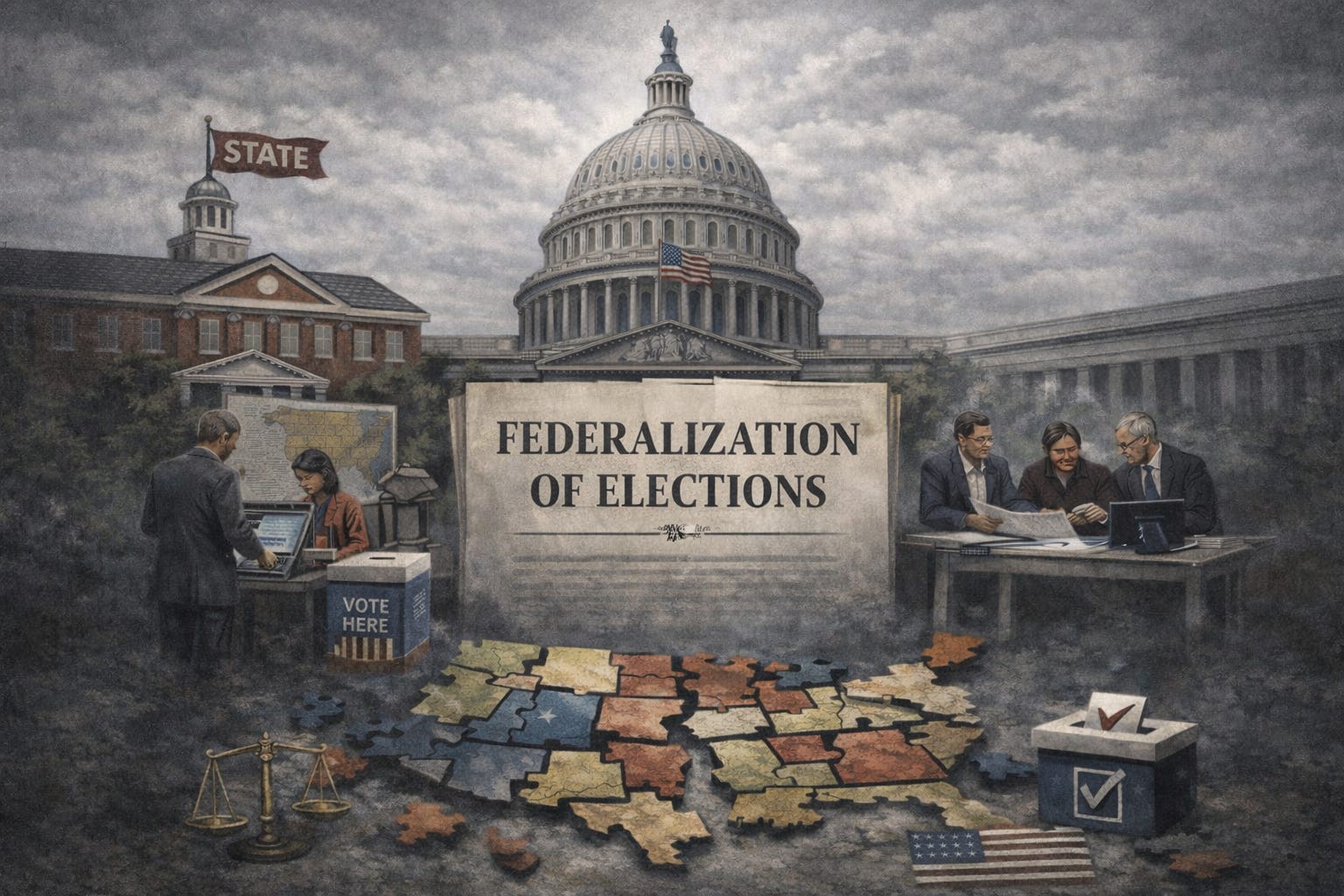
What could federal involvement in the 2026 midterm elections look like?
As I’ve been thinking about federal involvement in the midterms, I’ve broken it down into direct interventions and potential indirect involvement. In this post today, I’ll talk about direct means of federal involvement using federal resources, and save discussion about the indirect interventions for my next post.
Attempts before, during, and after the election to request and/or seize voter files, ballots, voting machines, and election management systems.
We have seen this scenario in recent months, first with the federal demands that states and localities share voter registration databases, and more recently with the raids of election offices in Fulton County, Georgia. While these activities are time consuming and stressful for election officials, keep in mind that we are not currently in the midst of the conduct of a major federal election. If requests and/or seizures like these were to happen in late October or early November, they would be hugely disruptive to the process of conducting the midterm elections in targeted jurisdictions. Disruptions involving the seizure of voting machines or election management systems could even effectively shut down an election in a targeted jurisdiction. One wonders if the efforts to obtain voter files and the actions in Fulton County were simply a dress rehearsal for similar disruptions later this election season.
Deployment of federal resources—ranging from DOJ attorneys to FBI and ICE agents—to polling places and ballot processing centers during the midterms.
This is a hugely disruptive scenario, and one that was threatened during the special election held in California this past fall. The presence of any federal officials in a polling place or voting center would be quite disruptive, as it would put the staff of the voting location on edge. The federal official could try to engage with the voting location personnel in many ways to make it difficult for them to provide necessary services to voters. But more troubling, the presence of federal officials in a voting location—especially those in any type of uniform—could turn voters away. The mere presence of a uniformed and masked ICE agent, for example, at the entrance to a polling place, might be so frightening to some voters that they don’t want to confront the agent. Even worse, imagine if the federal agents confronted voters trying to enter a polling place, and began to demand information, or request to see their identification. This would make polling places highly confrontational, and likely reduce voter turnout. The presence of federal agents in ballot processing centers would have similar effects, especially on those working to process and tabulate ballots — with the potential for confrontations that could dramatically slow the process of post-election tabulation or even halt it entirely.
Mobilization of National Guard units and their deployment to polling places and ballot processing centers.
Were National Guard units deployed during an election, the same problems that I discussed above would occur. However, the National Guard deployment might lead to other problems—in particular, it raises serious concerns about confrontations in polling places and other election administration locations. Also, the scale of a National Guard deployment could be significantly greater than might occur if other federal agents are deployed. And for many Americans, the optics of seeing armed National Guard personnel, in combat fatigues, in front of a polling place or ballot tabulation facility, would be chilling and could have unknown consequences for voter turnout and confidence.
Requests, demands, or court orders for post-election recounts and/or audits conducted by federal resources.
These types of interventions would occur post-election, and could significantly slow down and hamper the work that election officials already would be doing to reconcile, audit, and confirm the outcomes of the elections in their jurisdiction. Slowing the process, questioning the integrity or accuracy of posted election results, or any similar intervention, could make it difficult or impossible to get accurate, finalized results immediately after the November midterm election. These steps could lead to considerable confusion about the winners and losers of the midterm elections, and might then end up generating a true crisis of confidence in American democracy.
Requests, demands, or court orders to block certain election administration activities (such as the sending of, or tabulation of, all or a specific segment of vote-by-mail ballots that might arrive after Election Day, regardless of that state’s deadlines).
A possible scenario here could be an effort by the federal government to seize or to block the tabulation of late-arriving ballots, no matter what a state’s regulations say about those ballots. This could be a scenario in California, a state where ballots postmarked on or before Election Day can be included in tabulation if they are received by the election officials no later than seven days after Election Day. This would generate considerable consternation among those whose ballots should be tabulated under the state’s regulations, create confusion among election officials, and lead to a chaotic post-election process with unclear winners and losers.
Using federal agencies to alter important parts of the election administration workflow.
Here I’m mainly concerned that the U.S. Postal Service might alter current mail handling procedures in ways that might slow or impede the handling of mail ballots. For example, they could change policies for when mail gets postmarked, or for how and where mail is processed, in ways that could disenfranchise those who try to otherwise legally vote by mail. There are already concerns that have been raised about recent USPS changes in the procedures they use for postmarking materials and how those changes might affect voting by mail, just imagine what might the situation were the USPS to make other changes in how they process mail in the weeks before the November 2026 midterm elections. Any changes to mail processing procedures could have significant consequences in states (like those in the west) that rely heavily on voting by mail, including generating significant confusion among voters and stakeholders, creating vast ballot processing issues for election officials, and potentially disenfranchising voters whose ballots get mired in processing delays or slow post marking procedures.
In my last post, I encouraged election officials and stakeholders to consider scenarios like these and to be prepared. While I’m certainly hoping that we do not see these types of direct federal intervention in the 2026 midterm elections, I also hope that by writing about some of these scenarios it helps everyone understand what might happen this fall. In my next post, I’ll discuss potential indirect direct means of federal involvement including the possible mobilization of supporters to intervene or interfere before, during, and after the election in all dimensions of midterm election administration.
And if you can think of other concerns about direct federal involvement or interference, please share those in the comments or send them directly to me.